quinta-feira, 17 de fevereiro de 2011

The Earth's Magnetism: An Introduction for Geologists


Roberto Lanza, "The Earth's Magnetism: An Introduction for Geologists"
Springer; 1 edition (2006) | ISBN:3540279792 | 278 pages | PDF | 8 Mb

Initially, this book reviews the general characteristics of the Earth’s magnetic field and the magnetic properties of minerals, and then proceeds to introduce the multifold applications of geomagnetism in earth sciences. The authors analyze the contribution of geomagnetism both in more general geological fields, such as tectonics and geodynamics, and in applied ones, such as prospecting and pollution. Primarily, the book is aimed at undergraduate geology or geophysics students. It is geared to provide them with a general overview of geomagnetism, allowing them to understand what contributions this branch of science can offer in the more special sectors of earth sciences. Graduate students and geology researchers will also benefit from it, as it enables them to gain a clear and concise image of the techniques which can be applied in their areas of specialization.

Dictionary of Gems and Gemology


Mohsen Manutchehr-Danai, “Dictionary of Gems and Gemology”
Springer | 2008-11-24 | ISBN: 3540727957 | 1035 pages | PDF | 169 MB

The rapid growth of gemological sciences and mineralogy requires a comprehensive dictionary for gemologists, mineralogists, geologists, jewel dealers, industry, and hobbyists. The third edition of this dictionary contains about 29,000 entries – about 4,000 more than the second edition. The comprehensive definitions are now completed by more than 1,500 charts, diagrams and figures. The author offers a one-stop reference to any matter dealing with gems and gemology.
Review of the 1st edition, published in the March 2001 issue of CHOICE
“Detailed and highly technical, this work provides encyclopedic coverage of terms, techniques, places, and people related to gems and gemology. Each entry includes scientific and historical information, often illuminated by a line drawing. The volume’s strength lies in its comprehensive scope; it treats all aspects of gemology beginning with the gems themselves, elaborates on technical methods and procedures, explicates professional terminology, and identifies individuals and associated groups. Supplementing the text, 21 tables contain such relevant information as atomic weights, light spectrum, and geological timetables. Given its useful format and comprehensiveness, the book will serve as an invaluable reference source for practitioners and serious scholars in the field.” L. Doumato, National Gallery of Art

Part 1


Part 2


The Evolution and Extinction of the Dinosaurs


Fastovsky, Weishampel - The Evolution and Extinction of the Dinosaurs.
Cambridge University Press | 2005 | ISBN: 0521811724 | 498 pages | PDF | 76.2 MB

This new edition of The Evolution and Extinction of the Dinosaurs is a unique, comprehensive treatment of this fascinating group of organisms.
It is a detailed survey of dinosaur origins, their diversity, and their eventual extinction.
The book can easily be used as a teaching textbook for a class, but it is also written as a series of readable, entertaining essays covering important and timely topics appealing to non-specialists and all dinosaur enthusiasts: birds as ‘living dinosaurs’, the new feathered dinosaurs from China, ‘warm-bloodedness’.
Along the way, the reader learns about dinosaur functional morphology, physiology, and systematics using cladistic methodology - in short, how professional paleontologists and dinosaur experts go about their work, and why they find it so rewarding.
The book is spectacularly illustrated by John Sibbick, a world-famous illustrator of dinosaurs, commissioned exclusively for this book.
This is a comprehensive student textbook on dinosaurs that non-specialists will also find fascinating.
The geological context of dinosaurs is also stressed, and dinosaurs are presented in the context of contemporary plate tectonic and climatic settings.

The Geology of Stratigraphic Sequences, Second Edition


Andrew D. Miall The Geology of Stratigraphic Sequences, Second Edition
Springer | 2010 | ISBN : 3642050263 | 864 pages | PDF | 27,7 MB

It has been more than a decade since the appearance of the First Edition of this book. Much progress has been made, but some controversies remain. The original ideas of Sloss and of Vail (building on the early work of Blackwelder, Grabau, Ulrich, Levorsen and others) that the stratigraphic record could be subdivided into sequences, and that these sequences store essential information about basin-forming and subsidence processes, remains as powerful an idea as when it was first formulated. The definition and mapping of sequences has become a standard part of the basin analysis process. The main purpose of this book remains the same as it was for the first edition, that is, to situate sequences within the broader context of geological processes, and to answer the question: why do sequences form? Geoscientists might thereby be better equipped to extract the maximum information from the record of sequences in a given basin or region. Tectonic, climatic and other mechanisms are the generating mechanisms for sequences ranging over a wide range of times scales, from hundreds of millions of years to the high-frequency sequences formed by cyclic processes lasting a few tens of thousands of years

terça-feira, 15 de fevereiro de 2011

Petrography of Igneous and Metamorphic Rocks


Petrography of Igneous and Metamorphic Rocks
By Anthony R. Philpotts

Publisher: Waveland Pr Inc | 2003 | 192 Pages | ISBN: 1577662954 | PDF | 20.47 MB

This comprehensive laboratory manual teaches students taking their first course in petrography the techniques of describing and classifying rocks as well as how to apply those techniques to common igneous and metamorphic rocks. Essential features include: a listing of common minerals with their most important distinguishing optical properties; over two hundred illustrations detailing the relation between optics and crystal morphology; an accompanying CD-ROM with color slides illustrating rock-forming minerals and the textures of rocks, many with text and audio annotations by the author; descriptions of the textures and structures of igneous and metamorphic rocks; the most important properties of all the minerals compiled in an easy-to-access, full-color table; and a chart for determining the approximate modal (volume) percentage of minerals in rocks. The classification of igneous rocks used in the book is the one proposed by the International Union of Geological Sciences (IUGS) Subcommission of the Systematics of Igneous Rocks. A list of commonly used rock names--many not part of the IUGS classification--is keyed to this classification. Also, the widely used Irvine- Baragar classification of volcanic rocks is included. Dr. Philpotts has organized a large amount of information to be easily and rapidly accessible. He provides students with a concrete foundation, giving them experience and confidence as they encounter the field of petrography.


New Aspects of Mesozoic Biodiversity

New Aspects of Mesozoic Biodiversity
Springer | 2010-07-29 | ISBN: 3642103103 | 185 pages | PDF | 2 MB

The proposed book is an edited volume which contains a thematic set of seven novel papers on contemporary issues of fossil vertebrates that includes new insights of tetrapod evolution during Palaeozoic and Mesozoic eras, discovery of new vertebrate fossils including dinosaur from different continents, new information on palaeo-osteohistology and palaeobiogeography of the Indian plate during the end Mesozoic. All the seven papers of the proposed book are extremely significant in the present milieu of interdisciplinary research in areas covering vertebrate palaeontology, palaeobiology, palaeoecology and palaeobiogeography. This book will give a glimpse of the present day state of the art knowledge of these branches of science. The papers of the proposed book are the results of pioneering researches of the concerned scientists who have excellently presented their ideas/views and new discoveries in their contributions making this book intellectually attractive to the researchers in these fields all over the world. The problems and issues addressed in these papers are of general interest, so this book will not only attract the vertebrate palaeontologists but will also arouse interest of the researchers and professionals dealing with evolutionary biology and biodiversity.

Out of seven papers of the proposed book, the first paper offers most valuable information on the recent major advances in palaeobiological researches on Palaeozoic-Mesozoic vertebrates and includes information on new discoveries filling the gaps in the evolution of higher taxa, application of new techniques such as molecular palaeontology, CT scanning of fossil bones and development of new concepts generating novel hypotheses. In the second paper/chapter a brilliant analysis is made on the evolution, diversification and extinction of the reptilian group, Lepidosauria, with its two major components, Rhynchocephalia and Squamata, since its appearance in the Triassic till today. One of the keystones in the evolutionary history of vertebrates is the new information provided by the discoveries of the new vertebrate fossils from different parts of the world. There are two such papers; one of them includes description of the earliest pterosaur of the world discovered from the Triassic sediments of Brazil while another paper is on the recovery and description of a new abelisaurid dinosaur from India. In the field of vertebrate palaeontology study of bone microstructure is a recent challenging development, which provides substantial information on the palaeobiology of the fossil animals. In one of the papers, the authors described the bone microstructure of a Triassic kannemeyeriid dicynodont from India and deciphered rapid osteogenesis and overall fast growth of the taxon with three distinct ontogenic stages. The penultimate paper/chapter deals with the Late Mesozoic Indian biota, their endemism, cosmopolitanism and evolution in the background of end Cretaceous mass extinction event as well as the extensive Deccan basalt eruption while the last paper/chapter compiles latest information on the tectonic evolution of the Indian plate with its biogeography during the Cretaceous-Tertiary period testing the models of geodispersal and vicariance.

This book will generate interest to professionals, researchers, teachers and graduate students of vertebrate palaeontology, geology and zoology of all the Universities as well as the researchers associated with the Natural History Museums located in different parts of the world. Besides, the academic or professional societies such as Geological Society of London, Palaeontological Association, UK; Society of Vertebrate Paleontology, USA; Palaeontological Society of India, Palaeontological Association, France; Palaeontological Society of China, Palaeontological Association of Australasia will also be interested to keep a copy.


The Concise Geologic Time Scale

The Concise Geologic Time Scale
Cambridge University Press; 1 edition (September 29, 2008) | ISBN: 0521898498 | 184 pages | PDF | 35 MB

This concise handbook presents a summary of Earth's history over the past 4.5 billion years as well as a brief overview of contemporaneous events on the Moon, Mars and Venus. The authors have been at the forefront of
chronostratigraphic research and initiatives to create an international geologic time scale for many years, and the charts in this book present the most up to date, international standard, as ratified by the International Commission on Stratigraphy and the International Union of Geological Sciences. This book is an essential reference for all geoscientists, including researchers, students, and petroleum and mining professionals. The presentation is non-technical and illustrated with numerous colour charts, maps and photographs. The book also includes a detachable laminated card of the complete time scale for use as a handy reference in the office, laboratory or field.


Carbonate Platform Systems: Components and Interactions


Carbonate Platform Systems: Components and Interactions By E. Insalaco, P. W. Skelton, T. J. Palmer
Publisher: Geolo gical Soci ety of London 2001 | 240 Pages | ISBN: 1862390746 | PDF | 26 MB


Carbonate Platform Systems: components and interactions is a collection of 13 papers, plus an introduction, concerning the effects of organism-environment interactions in modern and ancient carbonate platforms, arising from the Lyell Meeting on 'Organism-Environment Feedbacks in Carbonate Platforms and Reefs' held at the Geological Society, UK. The papers presented here provide an integrated view of carbonate platforms, emphasizing dynamic interactions at all hierarchical levels and revealing the limitations of uniformitarian analogy in biotically influenced sedimentary systems. Selected case studies from around the world illustrate aspects ranging from the genesis of growth fabrics to changing patterns of carbonate platform development. The text will be of interest to sedimentologists, palaeontologists and marine ecologists alike.
Readership: Sedimentologists, Palaeontologists, Marine Ecologists, Petroleum Exploration & Production Geologists and Marine Environmental Conservationists.

Dictionary of Earth Sciences, 3 edition


Michael Allaby, "Dictionary of Earth Sciences, 3 edition"
O..rd U.ty Press, USA | 2008 | ISBN: 0199211949 | 672 pages | PDF | 5,3 MB

This leading dictionary--now in its third edition--offers wide-ranging and authoritative coverage of the earth sciences and related topics. In more than 6,250 clear and accessible entries, it covers geology, oceanography, paleontology, mineralogy, volcanology, and planetary science as well as climatology, geochemistry, and petrology. The third edition is fully updated and includes additional coverage of process geomorphology and physical geography, plus more than 50 new line drawings to accompany descriptions of forms and processes. The new edition also features web links accessed via a companion website, featuring additional information that is regularly updated to ensure that it stays fresh. Finally, the book has a revised bibliography and a number of appendices that include a revised geological time scale, stratigraphic units, lunar and Martian time scales, wind-strength scales, and SI units. It is an essential reference for students of geography, geology, and earth sciences and in related disciplines.

Download


Radiogenic Isotopes in Geologic Processes (repost)


Sergei V. Rasskazov, Sergei B. Brandt, and Ivan S. Brandt "Radiogenic Isotopes in Geologic Processes"
Publisher: Springer | ISBN: 9048129982 | edition 2009 | PDF | 306 pages | 2.8 mb

This book presents a modern approach of radiogenic isotope methods for solutions on problems in theoretical and practical geology. New approaches on thermochronology are of particular interest. Results on age measurements for timing of the Earth’s formation, main stages in evolution of biota in the Phanerozoic, and the most important tectonic and magmatic events in the Late Mesozoic through the Cenozoic of Central and East Asia, the western margin of North America, and Northeastern Africa are discussed. Systematics of magmatic sources in terms of isotope geochemistry in continents and ocean-continent transition zones are covered. Formal mathematical considerations on radiogenic isotope geology that are presented in a simple way with numerical examples and tables that can be used for solutions of theoretical problems on the origin and evolution of the Earth as well as for correct selection of material in regional geochronological studies and dating of individual geological objects.

Aqueous Environmental Geochemistry


Aqueous Environmental Geochemistry By Donald Langmuir
Publisher: Pren tice H a l l 1997 | 600 Pages | ISBN: 0023674121 | PDF | 27 MB


Langmuir provides a thorough presentation of natural chemical concentrations, systems and processes to help readers (1) understand controls on the chemical quality of surface and subsurface waters, and (2) distinguish between the natural and the anthropogenic. Unlike most authors, whose civil/sanitary engineering backgrounds promote a more aquatic chemistry perspective, LangmuirUs geology/geochemistry experience focuses coverage on the chemical interactions between water and geological materials. The book provides valuable training in using in the geochemical computer code MINTEQA2 as an integral problem-solving tool.

quinta-feira, 23 de dezembro de 2010

Elsevier's Dictionary of Geography: in English, Russian, French, Spanish and German

Elsevier's Dictionary of Geography: in English, Russian, French, Spanish and German
North Holland; Mul edition | January 3, 2007 | ISBN-10: 0444510427 | 1072 pages | PDF | 27.5 Mb

Geography is a system of highly developed sciences about the environment. Geographical science embracing the study of the Earth's physical phenomena, people and their economic activities has always been in need of an extensive terminology. Geographical terms are related to the terms of natural sciences (physics, chemistry, biology, geology, etc.) and humanities (history, economics, sociology, etc.) since geography is based on these fundamental subjects.

Geography includes a number of disciplines and subdivisions which appeared along with the development of the science In spite of being very different geographical disciplines have some common tools of investigation which is maps, comparative method of exploration, remote sensing, geoinformation systems.

Microtectonics

Microtectonics
Springer | December 15, 2005 | ISBN-10: 3540640037 | 366 pages | PDF | 30.46 MB

This book deals with descriptions and interpretations of small-scale structures in deformed rock, as seen … through an optical microscope. The text fills a valuable niche, as many textbooks on structural geology do not discuss microscopic aspects of deformation … . The book is extremely well illustrated with some 322 figures … . The book explains basic principles in a simple form with considerable references, enabling the reader to obtain more in-depth information … . I recommend it as an addition to any geologist’s bookshelf.

Making of the Earth: Geological Forces That Shape Our Planet

Making of the Earth: Geological Forces That Shape Our Planet
Facts on File | November 2000 | ISBN-10: 0816042764 | 257 pages | PDF | 8.5 Mb

We live on a dynamic planet with diverse landforms and bodies of water and ice. The vast surface of the Earth is constantly changing. Making of the Earth provides the latest research in the study of the natural and man-made forces that influence the scope and shape of the planet. Among the topics covered are Arctic geology, coastal geography, continental formation, desert features, erosion, glacial landscapes, global tectonics, mountain ranges, riverine topography, tectonic processes, unique landforms, and volcanic terrain.

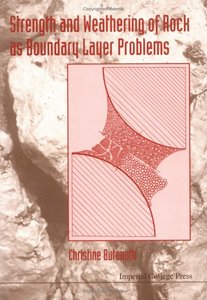
Strength and Weathering of Rock As Boundary Layer Problems By Christine Butenuth

Strength and Weathering of Rock As Boundary Layer Problems By Christine Butenuth
Publisher: Wo rld Scient ific Publishi ng Compa ny 2001 | 296 Pages | ISBN: 1860942474 | DJVU | 3 MB


A geology and geoscience reference addressing: the concepts, definitions and experience of strength, the physical-chemical aspects of the strength of pure phases, strengthening of grain packings by 'intermolecular forces,' the behavior of Buntersandstone and lessons for understanding weathering processes, and more. Halftone illustrations.

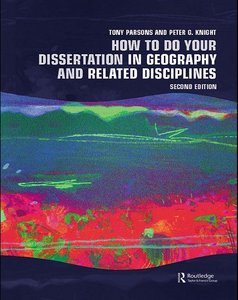
Tony Parsons, "How To Do Your Dissertation in Geography and Related Disciplines, Second Edition"

Tony Parsons, "How To Do Your Dissertation in Geography and Related Disciplines, Second Edition"
Routl.dge | 2005 | ISBN: 0415341558 | 155 pages | PDF | 1,2 MB

This revised and updated edition of How To Do Your Dissertation In Geography and Related Disciplines continues to provide a detailed guide to the planning and procedures that students need to consider when preparing their dissertations in geography, environmental science and geology. Taking into account new sources, improved technology in production of the dissertation, and changes in teaching style, this text goes through each of the stages, from deciding what topic to work on, through designing the research and collecting the data, to handing in the final bound volume. With an extended consideration of different types of data (qualitative, quantitative and spatial) and a wider consideration of different approaches to problem solving the text suggests practical ways of tackling the tasks involved and locates common pitfalls associated with each.

Download


Atomic Absorption Spectrometry

Atomic Absorption Spectrometry
Wiley-VCH; 3 edition | March 22, 1999 | ISBN-10: 3527285717 | 965 pages | PDF | 68.53 Mb

The thoroughly revised new edition of this best-seller, presents the wide use of AAS in numerous fields of application. The comparison between the different AAS techniques enables the reader to find the best solution for his analytical problem.
Authors Bernhard Welz and Michael Sperling have succeeded in finding a balance between theoretical fundamentals and practical applications. The new chapter 'physical fundamentals' describes the basic principles of AAS. The development of AAS is now described in a separate chapter. Further new chapters are devoted to the latest developments in the field of flow injection and the use of computers for laboratory automation. Methodological progress e. g. speciation analysis is also covered in this new edition.

The index and the extensive bibliography make this book a unique source of information. It will prove useful not only for analytical chemists, out also spectroscopists in industry, institutes, and universities. Atomic Absorption Spectrometry will also be invaluable for clinics and research institutes in the fields of biochemistry, medicine, food technology, geology, metallurgy, petrochemistry, and mineralogy.

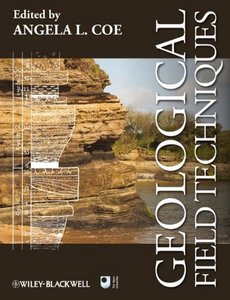
Dr Tom W Argles, Dr David A Rothery, Professor Robert A Spicer, and Dr Angela L. Coe, "Geological Field Techniques"

Dr Tom W Argles, Dr David A Rothery, Professor Robert A Spicer, and Dr Angela L. Coe, "Geological Field Techniques"
Wi-y-Black-well | 2010 | ISBN: 1444330624 | 336 pages | PDF | 31,9 MB

The understanding of Earth processes and environments over geological time is highly dependent upon both the experience that can only be gained through doing fieldwork, and the collection of reliable data and appropriate samples in the field. This textbook explains the main data gathering techniques used by geologists in the field and the reasons for these, with emphasis throughout on how to make effective field observations and record these in suitable formats. Equal weight is given to assembling field observations from igneous, metamorphic and sedimentary rock types. There are also substantial chapters on producing a field notebook, collecting structural information, recording fossil data and constructing geological maps.

Geological Field Techniques is designed for students, amateur enthusiasts and professionals who have a background in geology and wish to collect field data on rocks and geological features. Teaching aspects of this textbook include:
step-by-step guides to essential practical skills such as using a compass-clinometer, making a geological map and drawing a field sketch;
tricks of the trade, checklists, flow charts and short worked examples;
over 200 illustrations of a wide range of field notes, maps and geological features;
appendices with the commonly used rock description and classification diagrams;
a supporting website hosted by Wiley Blackwell.


Download


Geological Formation Names of China (1866-2000)

Shouxin Zhang, "Geological Formation Names of China (1866-2000)"
Spr-inger | 2009 | ISBN: 3540938230 | 1784 pages | PDF | 10,1 MB

Geological Formation Names of China (1866—2000) is the only catalogue on stratigraphic nomenclature for China in the world to keep two writing types (Wade-Giles Romanization and Chinese Phonetic Alphabet) so as to provide convenience for domestic and overseas readers. The catalogue is intended for specialists and graduates in Geosciences and Stratigraphy. Shouxin Zhang (1927 —2006) was stratigrapher and research professor at the Institute of Geology and Geophysics, Chinese Academy of Sciences.


Download


quarta-feira, 10 de novembro de 2010

Kevin R. Evans, James S. Aber From Precambrian Rift Volcanoes to the Mississippian Shelf Margin: Geological Field Excursions in the Ozark Mountains (G

Kevin R. Evans, James S. Aber From Precambrian Rift Volcanoes to the Mississippian Shelf Margin: Geological Field Excursions in the Ozark Mountains (GSA Field Guide 17)
Geological Society of America, Incorporated | 2010 | ISBN: 0813700175 | 764 pages | PDF | 38 MB

Developed in conjunction with the 2010 GSA North-Central/South-Central Section Meeting in Branson, Missouri, USA, this new volume from The Geological Society of America includes six field trips that convey discovery and insight into the long-studied geology of the Ozark region. This book is a valuable tool not just for the meeting attendee, but to all students of geoscience interested in following in the footsteps of the book’s authors.
Trips will examine world-class lead and zinc mineral accumulations in the tri-state mining district of Kansas, Missouri, and Oklahoma; the Precambrian and Cambrian geology of Proffit Mountain as exposed by the catastrophic reservoir-collapse and flood scour that occurred along the East Fork of the Black River in December 2005; the geologic history of Riverbluff Cave in Springfield, Missouri; the rock resources of southwestern Missouri and the impact of geology on two Civil War battlefields there; and a comprehensive geologic mapping project centered along the Ozark Scenic National Riverways.

R. E. Holdsworth, R. A. Strachan, J. Magloughlin, R. J. Knipe, "The Nature and Tectonic Significance of Fault Zone Weakening"

R. E. Holdsworth, R. A. Strachan, J. Magloughlin, R. J. Knipe, "The Nature and Tectonic Significance of Fault Zone Weakening"
Publisher: Geological Society of London | 2001-10 | ISBN 1862390908 | PDF | 344 pages | 29.2 MB


Many faults appear to form persistent zones of weakness that fundamentally influence the distribution, architecture and movement patterns of crustal-scale deformation and associated process in both continental and oceanic regions. This book brings together papers by an international group of Earth Scientists to discuss a broad range of topics centred upon the controls of fault weakening and the role of such faults during lithosphere deformation. Readership:Academic structural-tectonic geologists, microstructural geologists, rheologists, geophysicists and people studying geodynamics. Also, petroleum geologists, hardrock geologists, mining geologists, hydrogeologists and metamorphic geologists. Suitable for postgraduate students.

M.B. McClenaghan, "Drift Exploration in Glaciated Terrain (Geological Society Special Publication)"

M.B. McClenaghan, "Drift Exploration in Glaciated Terrain (Geological Society Special Publication)"
Publisher: Geological Society | 2001 | ISBN 1862390827 | PDF | 360 pages | 13.9 MB

This volume describes the use of till geochemical and indicator mineral methods for mineral exploration in the glaciated terrain of Canada. The principles and examples described in this volume will have direct applications for exploration companies looking for diamonds, precious and base metals and uranium in glaciated parts of North America, northern Europe and Asia and mountainous regions of South America.

Ken McCaffrey, Lidia Lonergan, Jamie Wilkinson, "Fractures, Fluid Flow and Mineralization (Geological Society Special Publication No. 155)"

Ken McCaffrey, Lidia Lonergan, Jamie Wilkinson, "Fractures, Fluid Flow and Mineralization (Geological Society Special Publication No. 155)"
Publisher: Geological Society of London | 1999 | ISBN 1862390347 | PDF | 328 pages | 26.4 MB

Hydrothermal mineralization is usually structurally controlled so it is important to understand the role of faulting and fracturing in enhancing rock permeability and facilitating fluid flow and mass transfer. This is the main theme of this interdisciplinary volume and the papers included are intended to pre an overview of current ideas at the interfaces of structural geology, fluid flow and mineralization research. The volume includes some speculative but provocative ideas which should stimulate a re-examination of existing concepts regarding fluid flow in fracture systems and the genesis of hydrothermal mineral deposits. It also highlights recent advances which show the importance of the development of fracture connectivity in focusing fluid flow. The volume concludes with a thematic set of papers presenting new research results on the genesis of the world famous Carboniferous base metal deposits of Ireland. This volume is intended for geoscientists studying the flow of fluids through fault, vein and fracture systems or the genesis of mineral deposits and will be of interest principally to those involved in the minerals industry and in academia.

Coltorti Massimo, H. Downes, M. Gregoire, S. Y. O'Reilly Petrological Evolution of the European Lithospheric Mantle (Geological Society Special Public

Coltorti Massimo, H. Downes, M. Gregoire, S. Y. O'Reilly Petrological Evolution of the European Lithospheric Mantle (Geological Society Special Publication 337)
The Geological Society of London | 2010 | ISBN: 1862393044 | 256 pages | PDF | 5,9 MB

Several different databases and models have been developed over many years of petrological study carried out by several European and non-European groups on mantle xenoliths, peridotite massifs, ophiolites and mafic magmas spanning in age from Archaean to Recent times. This volume aims to bring together these different approaches and to integrate the geochemical perceptions of the European upper mantle. The papers include regional petrological studies of the European lithospheric mantle, from Spain to the Pannonian Basin, from Corsica and Serbia as far north as Svalbard. Six contributions are based on studies of mantle xenoliths, while the remaining three deal with ophiolitic and peridotitic complexes. A further article provides an update on the textural classification of mantle rocks using a computer-aided approach and there is an introductory overview.

terça-feira, 9 de novembro de 2010

M. Davies, L. s, R. S. J. Sparks, R. M. Mellors, D. M. Pyle, M. Lanphere, B. Barreirio, "Santorini Volcano (Geological Society Special Memoir, 19)"

M. Davies, L. s, R. S. J. Sparks, R. M. Mellors, D. M. Pyle, M. Lanphere, B. Barreirio, "Santorini Volcano (Geological Society Special Memoir, 19)"
Publisher: Geological Society of London | 1999 | ISBN 1862390487 | PDF | 165 pages | 18.9 MB

Santorini is one of the most spectacular caldera volcanoes in the world. It has been the focus of significant scientific and scholastic interest because of the great Bronze Age explosive eruption that buried the Minoan town of Akrotiti. Santorini is still active. It has been dormant since 1950, but there have been several substantial historic eruptions. Because of this potential risk to life, both for the indigenous population and for the large number of tourists who visit it, Santorini has been designated one of five European Laboratory Volcanoes by the European Commission. Santorini has long fascinated geologists, with some important early work on volcanoes being conducted there. Since 1980, research groups at University, and later at the University of Bristol and Blaise Pascal University in Clermont-Ferand, have collected a large amount of data on the stratigraphy, geo, geochronology and petrology of the volcanics. The volcanic field has been remapped at a scale of 1:20 000. A remarkable picture of cyclic volcanic activity and magmatic evolution has emerged from this work. Much of this work has remained unpublished until now.

Continental Tectonics (Geological Society Special Publication)

Continental Tectonics (Geological Society Special Publication)
Publisher: Geological Society of London | ISBN: 1862390517 | edition 1999 | PDF | 300 pages | 30,2 mb

The evolution of oceanic plates is very well described by plate tectonic theory, but the study of continental tectonics is more complicated. Continental plates have a different rheology, a greater mean age, a higher heat productivity, and are more heterogeneous in composition. An understanding of continental tectonics requires, therefore, that these effects upon rigid plate behaviour be taken into account. This book brings together a series of papers which explore various aspects of the deformation of continental lithosphere, covering different tectonic settings from the Palaeozoic to the present day. These include the processes of terrane accretion and juxtaposition, the exhumation of high-pressure terrains, and mechanisms of crustal extension and rifting. The book will be of general interest to a broad audience of earth scientists concerned with global tectonics, continental growth processes, and the deformation of the continents during collision, exhumation and extension.

R. D. Larter, "Intra-Oceanic Subduction Systems: Tectonic and Magmatic Processes (Geological Society Special Publication)"

R. D. Larter, "Intra-Oceanic Subduction Systems: Tectonic and Magmatic Processes (Geological Society Special Publication)"
Geological Society of London; illustrated edition (January 1, 2003) | English | 1862391475 | 352 pages | PDF | 37.92 MB

Recycling of oceanic plate back into the Earth's interior at subduction zones is one of the key processes in Earth evolution. Volcanic arcs, which form above subduction zones, are the most visible manifestations of plate tectonics, the convection mechanism by which the Earth loses excess heat. They are probably also the main location where new continental crust is formed, the so-called 'subduction factory'. About 40% of modern subduction zones on Earth are intra-oceanic. These subduction systems are generally simpler than those at continental margins as they commonly have a shorter history of subduction and their magmas are not contaminated by ancient sialic crust. They are therefore the optimum locations for studies of mantle processes and magmatic addition to the crust in subduction zones.
This volume contains a collection of papers that exploit the relative simplicity of intra-oceanic subduction systems to provide insights into the tectonic, magmatic and hydrothermal processes associated with subduction.

domingo, 17 de outubro de 2010

Shun-ichiro Karato, "Deformation of Earth Materials: An Introduction to the Rheology of Solid Earth"

Shun-ichiro Karato, "Deformation of Earth Materials: An Introduction to the Rheology of Solid Earth"
Cambridge University Press; illustrated edition (March 10, 2008) | English | 0521844045 | 474 pages | PDF | 7.37 MB

Much of the recent progress in the solid earth sciences is based on interpretation of a range of geophysical and geological observations in terms of the properties and deformation of earth materials. This graduate textbook presents a comprehensive, unified treatment of the materials science of deformation as applied to solid earth geophysics and geology. The deformation of Earth materials is presented in a systematic way covering elastic, anelastic and viscous deformation. Advanced discussions on current debates are also included to bring readers to the cutting-edge of science in this interdisciplinary area. This textbook is ideal for graduate courses on the rheology and dynamics of solid Earth, and includes review questions with solutions so readers can monitor their understanding of the material presented. It is also a much-needed reference for geoscientists in many fields including geology, geophysics, geochemistry, materials science, mineralogy and ceramics.
A comprehensive, unified treatment of the materials science of deformation as applied to solid earth geophysics and geology, this textbook is ideal for graduate courses on the rheology and dynamics of solid earth. It is also a much-needed reference for geoscientists in geology, geophysics, geochemistry, materials science, mineralogy and ceramics.

"Petrology of Sedimentary Rocks, Second Edition" by Sam Boggs, Jr.


"Petrology of Sedimentary Rocks, Second Edition" by Sam Boggs, Jr.
Cambridge University Press | 2009 | ISBN: 0521897165 | 612 pages | PDF | 15 Mb

This Second Edition maintains the fundamental structure of the original book, and presents a comprehensive treatment of sedimentary petrography and petrology. It has been thoroughly updated to include new concepts and ideas, and cutting-edge techniques such as cathodoluminescence imaging of sedimentary rocks and backscattered electron microscopy.

Numerous photographs and diagrams illustrate characteristic features while an extensive and up-to-date reference list provides a useful starting point for additional literature research.


This textbook is designed for advanced undergraduate and graduate courses in sedimentary petrology. It is also a key reference for researchers and professional petroleum geoscientists wanting to develop an understanding of the petrologic characteristics of sedimentary rocks and their geological significance.

Table of Contents

Part I. Principles:
1. Origin, classification and occurrence of sedimentary rocks;

Part II. Siliciclastic Sedimentary Rocks:
2. Sedimentary textures;
3. Sedimentary structures;
4. Sandstones;
5. Conglomerates;
6. Mudstones and shales;
7. Provenance of siliciclastic sedimentary rocks;
8. Diagenesis of sandstones and shales;

Part III. Carbonate Sedimentary Rocks:
9. Limestones;
10. Dolomites;
11. Diagenesis of carbonate rocks;

Part IV. Other Chemical/Biochemical Sedimentary Rocks and Carbonaceous Sedimentary Rocks:
12. Evaporites, cherts, iron-rich sedimentary rocks, and phosphorites;
13. Carbonaceous sedimentary rocks;
Bibliography;
Index.

Donal M. Ragan, "Structural Geology: An Introduction to Geometrical Techniques"

Donal M. Ragan, "Structural Geology: An Introduction to Geometrical Techniques"
Cambridge University Press | 2009 | ISBN: 0521897580, 0521745837 | 624 pages | PDF | 6,2 MB

This combination of text and lab book presents an entirely different approach to structural geology. Designed for undergraduate laboratory classes, it provides a step-by-step guide for solving geometric problems arising from structural field observations. The book discusses both traditional methods and cutting-edge approaches, with emphasis given to graphical methods and visualization techniques that support students in tackling challenging two- and three-dimensional problems. Numerous exercises encourage practice in using the techniques, and demonstrate how field observations can be converted into useful information about geological structures and the processes responsible for creating them. This updated fourth edition incorporates new material on stress, deformation, strain and flow, and the underlying mathematics of the subject. With stereonet plots and solutions to the exercises available online at www.cambridge.org/ragan, this book is a key resource for undergraduates, advanced students and researchers wanting to improve their practical skills in structural geology.


Download


Harold Stowell - Geology of Southeast Alaska: Rock and Ice in Motion

Harold Stowell - Geology of Southeast Alaska: Rock and Ice in Motion
Publisher: University of Alaska Press | 2006-03-01 | ISBN: 188996381X | PDF | 152 pages | 5.79 MB


The most powerful forces on earth have shaped the landscape of Southeast Alaska. Scientists and visitors from around the world trek north to experience wild rivers, powerful glaciers, and breathtaking mountain peaks. Now, for the first time, a handy guide to the region is available. Complete with color illustrations revealing millions of years of geological history and in-depth descriptions of Sitka, Juneau, and Glacier Bay, Geology of Southeast Alaska is essential reading for anyone fascinated by rock and ice in motion.
Written by a geologist with over twenty-five years of experience in the north, Geology of Southeast Alaska will entertain and inform with abundant photographs and detailed drawings. Whether you want to understand the forces that shaped the state of Alaska, or you want to learn the basics of glacial movement, this compact, authoritative book is for you.

"Paleoseismology" ed. by James P. McCalpin

"Paleoseismology" ed. by James P. McCalpin
International Geophysics, Volume 95, Second Edition
Elsevier Inc | 2009 | ISBN: 0123735768 | 802 pages | PDF/djvu | 39/22 Mb

Completely updated version of a book solely devoted to paleoseismology. It summarizes the development of the field from the 1960s to the present. Chapters cover the entire range of techniques currently used in paleoseismic reconstruction.


Contents

Introduction to Paleoseismology
Field Techniques in Paleoseismology — Terrestrial Environments
Sub-Aqueous Paleoseismology
Paleoseismology in Extensional Tectonic Environments
Paleoseismology of Volcanic Environments
Paleoseismology of Compressional Tectonic Environments
Paleoseismology of Strike-Slip Tectonic Environments
Using Liquefaction-Induced and Other Soft-Sediment Features for Paleoseismic Analysis
Using Landslides for Paleoseismic Analysis
Application of Paleoseismic Data to Seismic Hazard Assessment and Neotectonic Research

Andrew D. Miall The Geology of Stratigraphic Sequences, Second Edition

Andrew D. Miall The Geology of Stratigraphic Sequences, Second Edition
Springer | 2010 | ISBN : 3642050263 | 864 pages | PDF | 27,7 MB

It has been more than a decade since the appearance of the First Edition of this book. Much progress has been made, but some controversies remain. The original ideas of Sloss and of Vail (building on the early work of Blackwelder, Grabau, Ulrich, Levorsen and others) that the stratigraphic record could be subdivided into sequences, and that these sequences store essential information about basin-forming and subsidence processes, remains as powerful an idea as when it was first formulated. The definition and mapping of sequences has become a standard part of the basin analysis process. The main purpose of this book remains the same as it was for the first edition, that is, to situate sequences within the broader context of geological processes, and to answer the question: why do sequences form? Geoscientists might thereby be better equipped to extract the maximum information from the record of sequences in a given basin or region. Tectonic, climatic and other mechanisms are the generating mechanisms for sequences ranging over a wide range of times scales, from hundreds of millions of years to the high-frequency sequences formed by cyclic processes lasting a few tens of thousands of years

John P. Rafferty, "The Paleozoic Era: Diversification of Plant and Animal Life"

John P. Rafferty, "The Paleozoic Era: Diversification of Plant and Animal Life"
Rosen Education Service | 2010 | ISBN: 1615301119, 1615301968 | 339 pages | PDF | 6,3 MB

Introduction:

The Paleozoic Era is probably less familiar and perhaps
less dramatic than the age of the dinosaurs that would
dominate the Mesozoic Era that followed. However, the
Paleozoic Era contained one of the most intense increases
in biodiversity in Earth’s history, the Cambrian explosion
and the subsequent Ordovician radiation. It also contained
the largest extinction event the world has ever
known, the Permian extinction, which wiped out more
than 90 percent of marine species and roughly 70 percent
of species on land. It was also a time of great geological
changes as landmasses migrated and collided, eventually
creating the supercontinent called Pangea. Sea levels rose,
drowning whole continents, fell, and rose again. Some of
Earth’s oldest mountain ranges, such as the Appalachians
and the Urals, were formed during the Paleozoic. Life
moved from the oceans to dry land and insects took wing
for the first time. Many evolutionary advances took place,
which set the stage for life as we know it today. Some of
these advances include the development of plants with
seeds, shelled eggs, and organisms capable of breathing
air. So in geologic history the Paleozoic Era was pretty
dramatic after all. In the pages that follow, all of these
developments, as well as the clues that scientists have used
to decipher the history of Earth’s changes, will be explored.
Spanning nearly 300 million years of history, from 542
to 251 million years ago, the Paleozoic Era covers more
than half of the Phanerozoic Eon, also known as the Age
of Life—the geologic time in which humans still live.
Scientists divide the Paleozoic into a number of smaller
periods, beginning with the Cambrian, approximately 542
million to 488 million years ago, followed by the
Ordovician, Silurian, Devonian, Carboniferous, and
Permian periods. Most of these names are derived from
the locations in which rocks and fossils from that time

Download


Soils in Archaeological Research By Vance T. Holliday

Soils in Archaeological Research By Vance T. Holliday
Publisher: OUP 2004 | 464 Pages | ISBN: 0195149653 | PDF | 6 MB


Soils, invaluable indicators of the nature and history of the physical and human landscape, have strongly influenced the cultural record left to archaeologists. Not only are they primary reservoirs for artifacts, they often encase entire sites. And soil-forming processes in themselves are an important component of site formation, influencing which artifacts, features, and environmental indicators (floral, faunal, and geological) will be destroyed and to what extent and which will be preserved and how well. In this book, Holliday will address each of these issues in terms of fundamentals as well as in field case histories from all over the world. The focus will be on principles of soil geomorphology , soil stratigraphy, and soil chemistry and their applications in archaeological research.

W. Schwarzacher, "Cyclostratigraphy and the Milankovitch Theory (Developments in Sedimentology)"

W. Schwarzacher, "Cyclostratigraphy and the Milankovitch Theory (Developments in Sedimentology)"
Publisher: Elsevier Science | 1993 | ISBN 0444896236 | PDF | 238 pages | 11.5 MB

Hardbound. Cyclostratigraphy is concerned primarily with measuring geological time and the time units used in this approach are sedimentary cycles. Milankovitch cycles mark time intervals of tens of thousands to several millions of years. Such cycles are the result of variations in the Earth's position in relation to the Sun and these in turn determine the climatic variations. The Milankovitch theory was resurrected in the 1960's when evidence from Pleistocene deep sea sediments linked orbital variations and climate.
This monograph discusses sedimentary cycles and their use in measuring geologic time. There is considerable effort made to clarify the term "sedimentary cycle", in particular, the two opposing concepts of cyclic stratification and event stratification. The recognition of sedimentary cycles and of Milankovitch cycles specifically, is considered and care is taken with the question of relating sediment thickness to time.